NEXT-GENERATION EOR PLATFORM | ORINOCO OIL BELT
1.36 Billion Barrels Trapped by a Single Molecule.The Science That Is Permanently Releasing Them.
RDV® (Dynamic Vasoactive Reactor) is not a diluent. It is not a solvent. It is an aqueous protonic platform that turns the reservoir into a Dynamic Catalytic Chamber — irreversibly breaking down extra-heavy crude molecules without naphtha, without condensate, and without dependence on fragile supply chains.
RDV®: An Aqueous Protonic Platform built for heavy and extra-heavy crude.
🚫 Zero Diluent Dependency: Eliminate recurring costs representing 30%–35% of gross barrel value.
🔬 Permanent Molecular Cleavage: Drastically lowers viscosity downhole and at surface with no external thermal input.
⚡ Zero Downhole CAPEX: Direct injection activating under existing reservoir temperature and pressure.
Dilution vs. Fragmentation
THE DIAGNOSIS: The Trap of Diluting What Was Never Broken
The Orinoco Belt doesn't suffer from a geological or reserves crisis. It suffers from a molecular bottleneck.
The Crude Wants to Flow
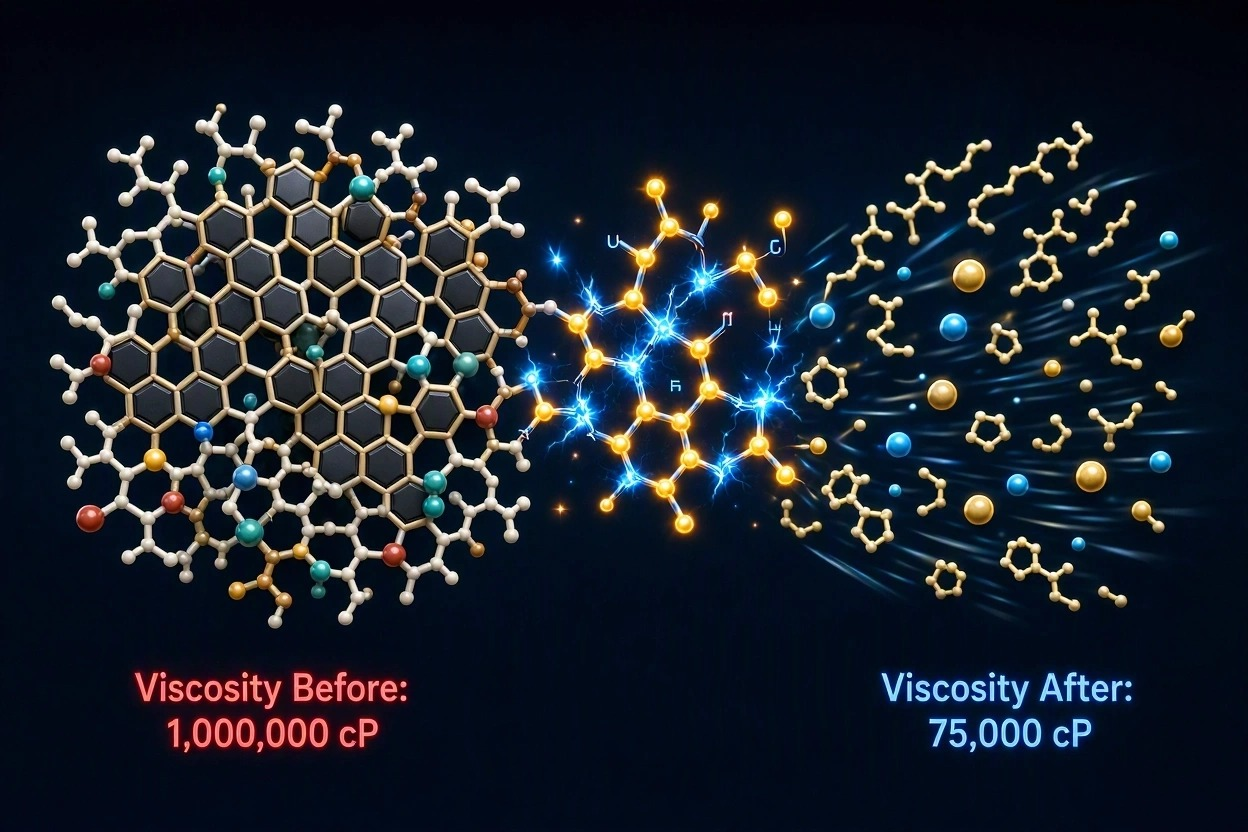
6° to 10° API crude flows under reservoir conditions (1,000 to 13,000 cP at 450–1,200 psi). But once it reaches the surface and degasses, asphaltenes and resins aggregate uncontrollably, driving viscosity past 1,000,000 cP.
The reservoir has energy to deliver fluid, but the intact asphaltene architecture physically resists movement. The crude wants to flow; the unbroken molecule refuses to let it.
Dilution Is an Operational Mortgage
The standard industry response is blending 25% to 40% naphtha, condensate, or light crude. Dilution does not break chemical bonds; it merely suspends heavy fractions temporarily.
Diluent consumes 30%–35% of the gross value of every single barrel produced. If supply barges are delayed or logistics freeze, field production halts instantly.
The Bottom Line
How many millions of barrels has your block left behind because the crude molecule was only diluted, but never chemically cleaved?
Continuous dilution is an operational mortgage, not an EOR solution.
The Mechanism — Dynamic Catalytic Chamber
RDV®: Turning the Reservoir into an In-Situ Catalytic Chamber
The 4-Stage Reaction Mechanism
Target In-Situ Injection
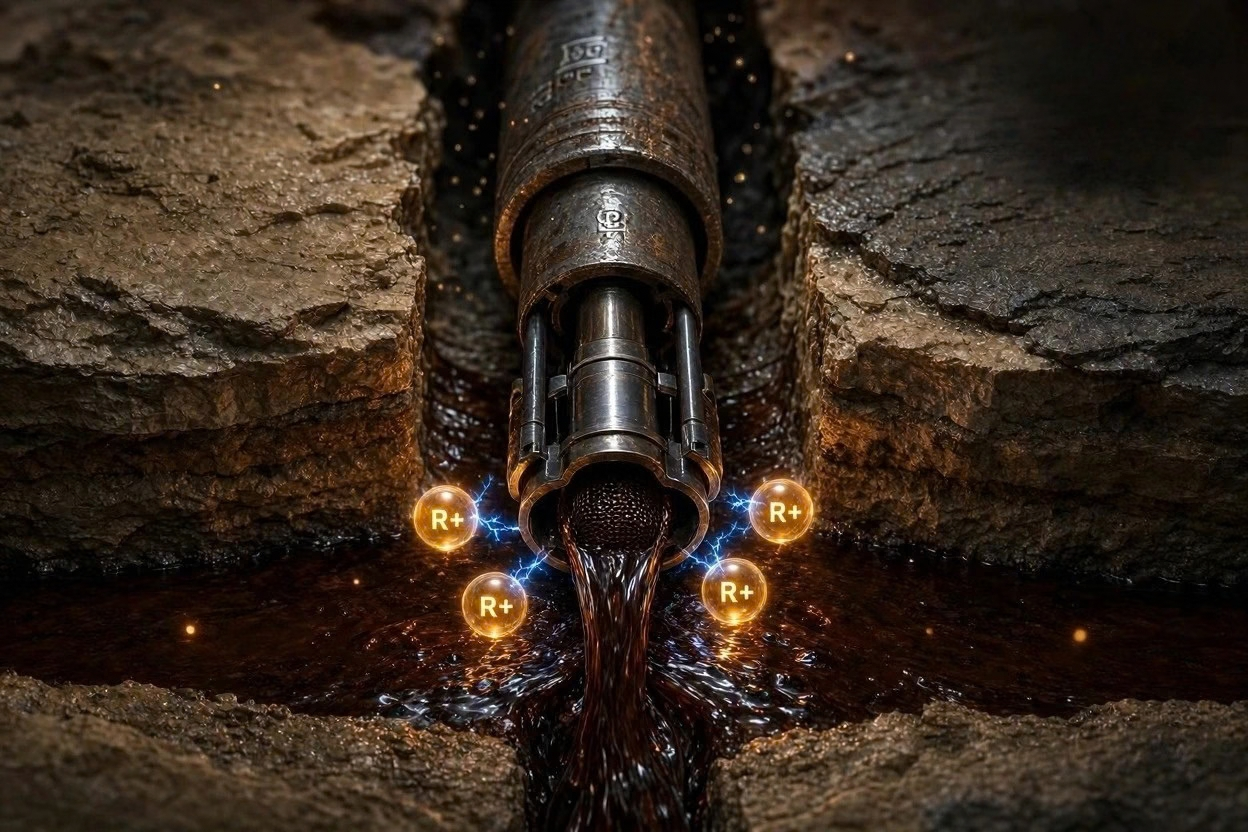
RDV® is delivered downhole via bullhead or capillary string into the near-wellbore matrix without specialized surface heating rigs.
Protonic Activation
Capitalizing on native reservoir enthalpy (temperature and pressure), the aqueous formulation acts as a charge-transfer donor (R+), releasing high-energy carbocations.
Irreversible Bond Cleavage
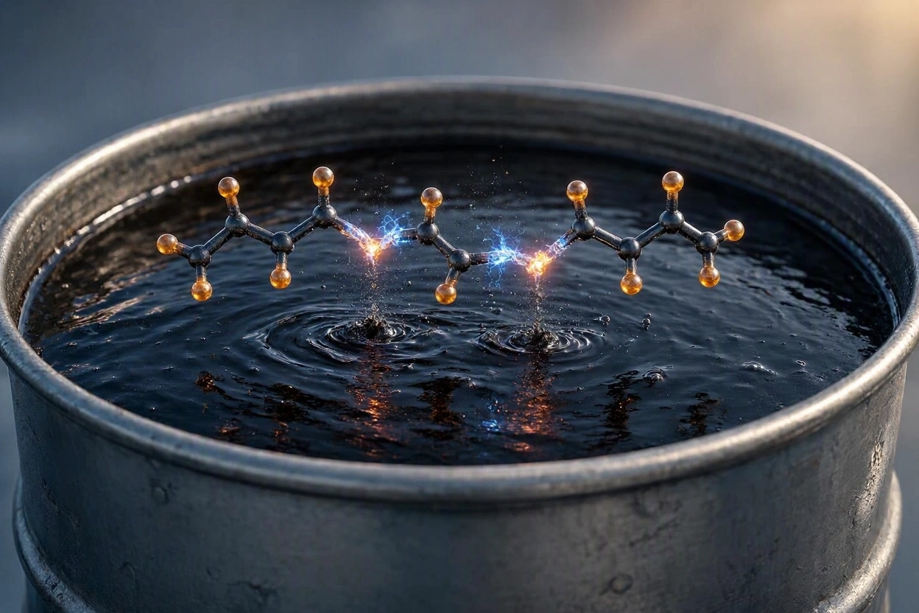
Active protonic molecular scissors selectively break C-C and C-H bonds across long-chain asphaltenes and paraffins, converting heavy structures into lighter, stable fractions (C13-C16).
Sustained Low-Viscosity Flow
Hydrocarbons arrive at surface facilities permanently upgraded, showing stable colloidal behavior and moving freely at 0% diluent demand.
Empirical Field & Lab Evidence
RDV® Performance Dashboard — Miga, Boscán & Alberta
Increased from 95 BOPD to 144 BOPD — Miga Field, Orinoco Belt
Zero naphtha or condensate injected after treatment — Well at Miga Field
39%–45% in Miga field; 74% in Boscán crude; 85% in Alberta core samples
CAPEX-free intervention paid back in under 96 hours of incremental flow
Documented economic yield within the first single production cycle
Pump Intake Pressure surged from 104 psi to 387 psi; fillage rose from 63% to 85%; BSW dropped from over 20% to 5.2%
Comparative Matrix: Conventional Diluent vs. RDV®
RDV® Voice AI Specialist
Ask Mr. GQ — Your Autonomous AI Heavy Oil Consultant

Mr. GQ
AI Voice Specialist — RDV® Heavy & Extra-Heavy Crude
Mr. GQ is an advanced real-time Voice AI Agent backed by an extensive engineering knowledge base covering the physical-chemical dynamics of RDV®, field logs across the Orinoco Oil Belt (FPO), and laboratory validations from Boscán to Alberta.
Connect via voice, speak directly through your microphone, and hear clear, data-backed technical explanations tailored to your block's reservoir conditions.
No commitment · Click to enable audio and speak directly in English — Typing optional
Not sure where to start?
Open the voice channel and ask Mr. GQ questions such as:
- “How does downhole protonation achieve irreversible molecular breakdown?”
- “What is a Dynamic Catalytic Chamber and how does it leverage reservoir enthalpy?”
- “How does RDV® reduce viscosity in degassed dead oil at surface facilities?”
- “How much diluent can my operation substitute based on our current API gravity?”
- “Can RDV® be applied in high water-cut (BSW) wells or shut-in assets?”
- “Is the chemistry fully compatible with progressive cavity (PCP) and ESP systems?”
- “What happens to asphaltene precipitation once the C-C bonds are cleaved?”
- “What was the exact production curve and payout timeline on the Miga-829 well?”
Prefer a written reservoir screening with our technical board?